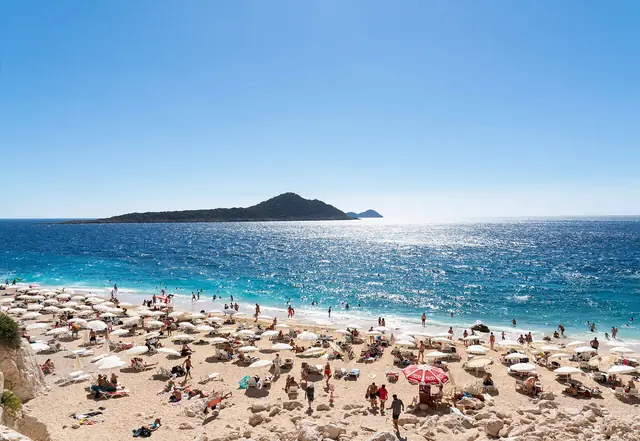
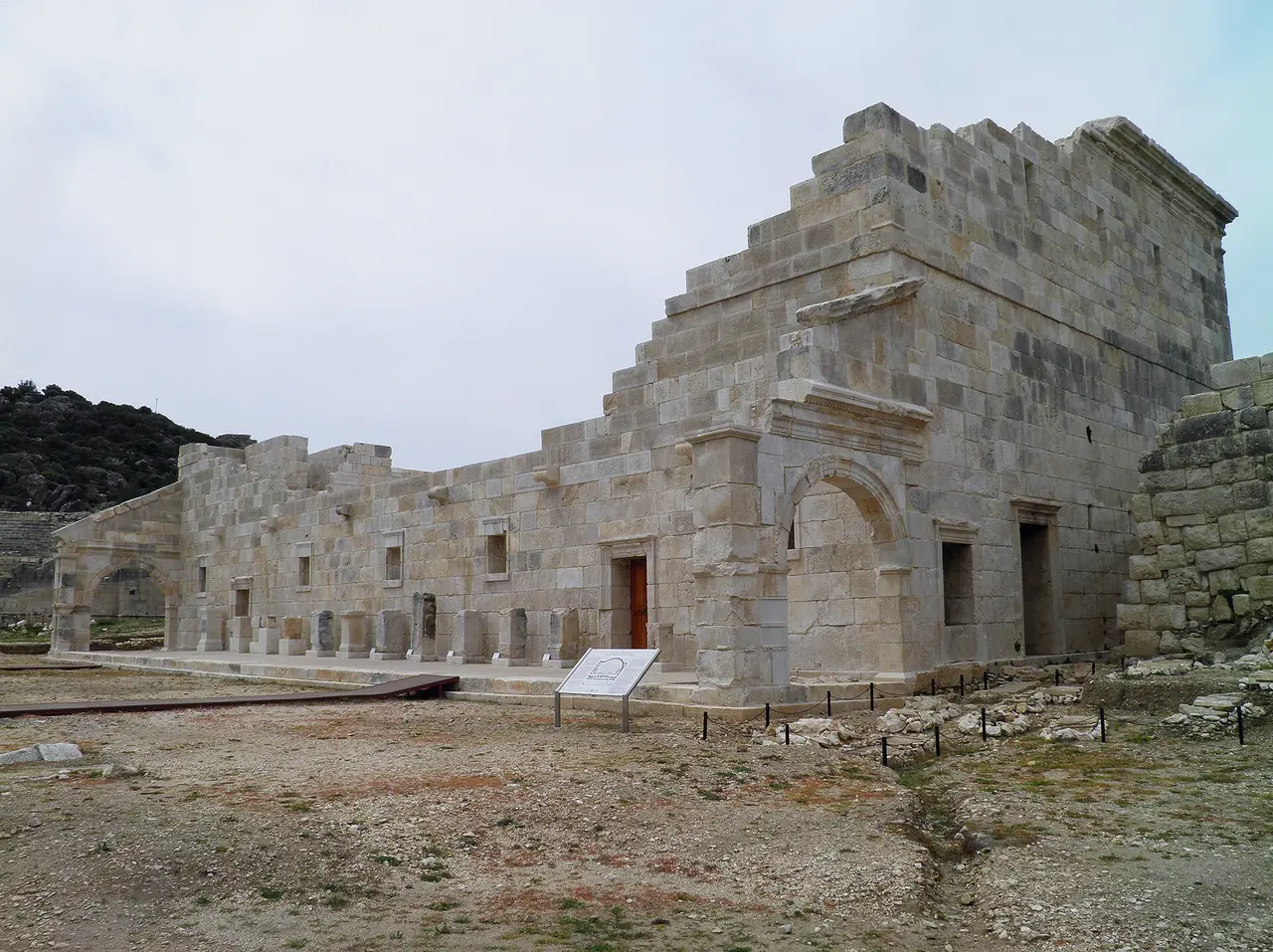
Patara is the ancient city behind Patara Beach, on the Lycian coast in the district of Kaş. It was the capital of the Lycian League, the federation of Lycian cities, and its restored assembly hall is where the league's delegates met. It is also, the Ministry of Culture and Tourism says, where St Nicholas was born and grew up. The ruins lie by the village of Gelemiş, behind a beach that muze.gov.tr puts at 18 km, so you can combine them with a swim. Allow two to three hours.
What it is
The ministry's Turkish Museums portal traces Patara back a long way:
- Early Bronze Age (3rd millennium BC): finds on the Tepecik acropolis show the site was already settled.
- 13th century BC: a city called "Patar" appears in Hittite texts, on the Yalburt inscription of King Tudhaliya IV. The Lycian name was Pttara.
- c. 540 BC: Persian rule; Alexander the Great reached Lycia in 334/333 BC. Under the Ptolemies, in the 3rd century BC, the city was briefly renamed Arsinoe.
- 168/167 BC: the Lycian League was founded, with Patara as its capital.
- AD 43: Lycia became a Roman province.
- Christian era: Bishop Methodius was executed in 312, and Patara's bishop Eudemus signed for Lycia at the Council of Nicaea; muze.gov.tr dates that to 325.
- Turkish period: a bath from the 12th century, and in 1478 Cem Sultan met a delegation from Rhodes here.
Highlights
- The assembly hall (bouleuterion). The building in our photo: 42.80 × 32.60 m, built in the late 2nd or early 1st century BC, for about 1,400 people. The portal says it was restored with the support of Türkiye's Grand National Assembly, a fitting patron for a parliament building.
- The theatre. On the north slope of Kurşunlu Hill, with 34 rows of seats for about 5,000 people and a stage building 41.5 m long. Its first phase is Hellenistic; muze.gov.tr says it was rebuilt after an earthquake in AD 147.
- Nero's lighthouse. Its inscription records that Emperor Nero ordered it built in AD 64/65 "for the safety of sailors". Today it stands about 500 m from the shore.
- The harbour street. A colonnaded street 12.60 m wide, which the portal calls the largest and best-preserved ancient street in Anatolia.
- The triumphal arch. Three passages, 19 m long and 10 m high, with inscriptions honouring the governor Mettius Modestus around AD 100. Statues of Trajan and Plotina once stood on it. West of it, muze.gov.tr notes a necropolis with Lycian-style sarcophagi.
- The granary of Hadrian. Built for Hadrian and his wife Sabina in the 2nd century AD, about 75 m long.
How to get there
The site's address is Gelemiş Mahallesi, Örenyeri Sokak No. 1, Kaş. The ministry pages give no distances, so plan the drive from Kaş or Kalkan with a map. Patara is an easy pairing with Xanthos, the other great Lycian city in this valley. Our Patara beach and ruins guide covers the day in more detail, and the Lycian Way passes close by.
Best time to visit
Spring and autumn are the comfortable seasons; on a summer afternoon the walk between the monuments is hot. In winter the light is lovely but the site closes at 17:30. Combine it with the beach: muze.gov.tr calls it an 18 km stretch and a rare nesting site for loggerhead turtles, so read our sea turtle beaches guide before an evening on the sand in summer.
Tickets and opening hours
Turkish Museums lists, as of 22 November 2026:
- Winter: 08:30–17:30, ticket office closes 17:00. The portal labels the season "1 October–31 March", which overlaps its summer row.
- Summer (1 April–31 October): 08:30–19:00, ticket office closes 18:30.
- Fees: €15 for foreign visitors aged 8 and over, free under 8; 200 TL for Turkish citizens, free for Turkish citizens under 18 or over 65.
The ministry's own site, muze.gov.tr, shows 08:00–19:00 every day with no seasonal split, and its leaflet uses 1 April–1 October for summer. Check on the day. MuseumPass The Mediterranean (€90, 7 days) is valid here; see our MuseumPass guide. The portal lists a car park, toilets, a shop and a café; muze.gov.tr adds an audio guide. Phone: 0242 843 50 18.
Tips
- Bring water and a hat for the walk between the monuments.
- Start at the assembly hall and theatre, then walk the harbour street towards the lighthouse.
- Keep the beach for last. Swim after the ruins, and respect the turtle-nesting rules on the sand.
What's nearby
- Kaputaş Beach, the cove between Kalkan and Kaş.
- St Nicholas Church, Demre, built over the tomb of Patara's most famous son.
- Lycian rock tombs near Antalya.
- Stay in Kalkan or Kaş; see our Kaş district guide.