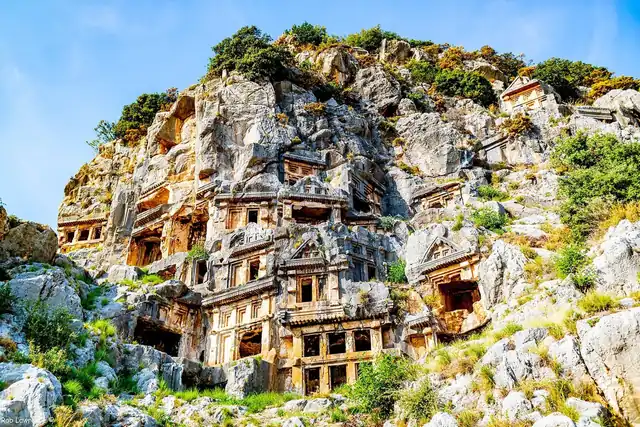
St Nicholas Church stands in the centre of Demre, the town on the Lycian coast that grew over ancient Myra. Nicholas was bishop of Myra, and the church was built over his tomb; through the saint's later fame as Santa Claus, it is the best-known Byzantine church on this coast. Today it is a state museum, the Aziz (St) Nikolaos Anıt Müzesi, but it is still a church, so dress modestly. Allow 45 minutes to an hour, and pair it with the rock tombs and theatre of Myra a few minutes away.
What it is
The Ministry of Culture and Tourism's Turkish Museums portal tells the building's story in layers:
- 5th–6th centuries: in the mid-5th century, under Theodosius II, Myra became the capital of Lycia, and a memorial building for Nicholas is known from that time. After an earthquake in 529, Justinian I had it repaired. The first church is generally taken to be a 6th-century basilica.
- 9th–10th centuries: after damage in the 8th century, from an earthquake or raids, the church was rebuilt as a domed basilica.
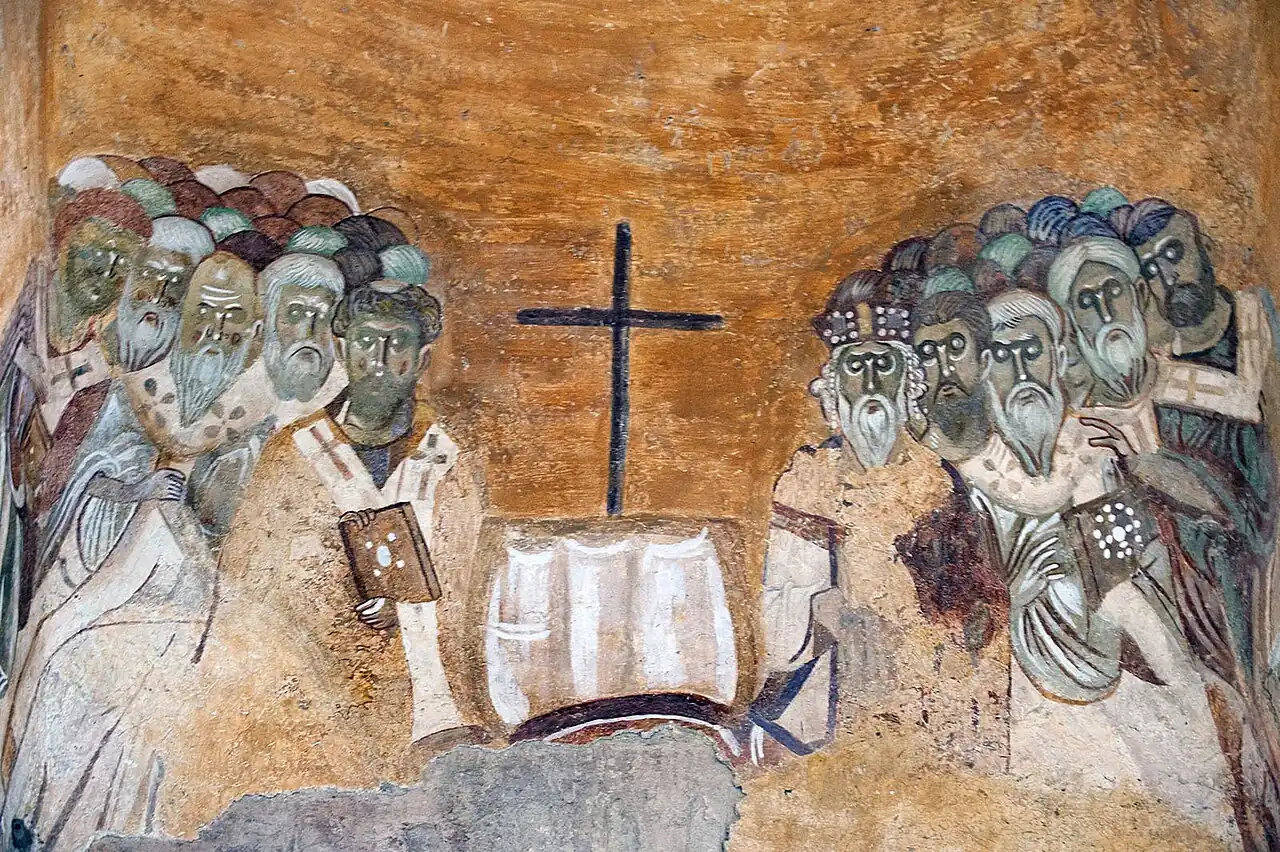
- 11th century: the inner narthex was painted with church councils. An inscription dated 1 September 1042 records restoration work by Emperor Constantine IX Monomachos and Empress Zoe.
- 1087: merchants from Bari opened the saint's tomb and took part of his remains to Italy, where they are kept in the Basilica of San Nicola.
- Late 12th century: the Myros river changed course and floods buried Myra, the church and its outbuildings in silt. The modern town lies about 6 m above the church floor, so the church sits well below today's streets.
- 1862–63: the Russian Archaeological Institute excavated and repaired the church under the patronage of Tsar Nicholas I. Its bell tower dates from that work.
Antalya Museum cleaned and repaired the church in 1963–64 and, in the 1980s, covered the south section with the steel-and-plastic shelter you see today. Hacettepe University excavated the monastery buildings, the bishop's residence and graves to the north between 1989 and 2009, and work continues under Professor Sema Doğan.
Highlights
- The tomb chamber frescoes. The 12th-century paintings in the south tomb chamber show scenes from Nicholas's life. The portal calls them the only cycle of his life in Türkiye.
- The council scenes. The 11th-century paintings in the inner narthex show church councils, with bishops gathered around an emperor.
- The sarcophagus. The ministry's museum page describes a Roman sarcophagus decorated with fish scales and acanthus leaves, which is believed to be the saint's.
- The floors. Marble panels in opus sectile, cut-stone patterns that the portal counts among the important examples of Byzantine art.
- Two chapels. The prothesis dome has a 12th–13th-century Communion of the Apostles; the south chapel has a 13th-century Deesis.
How to get there
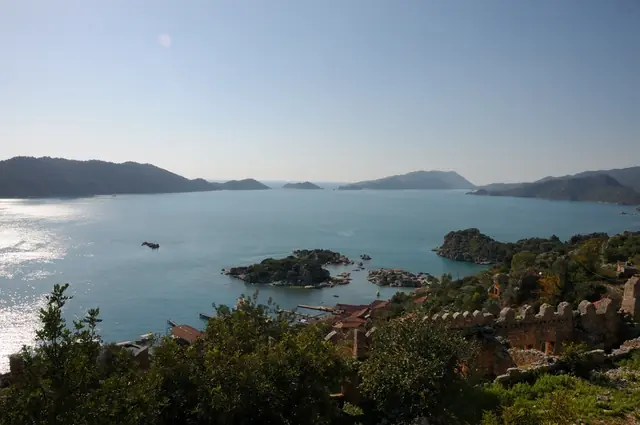
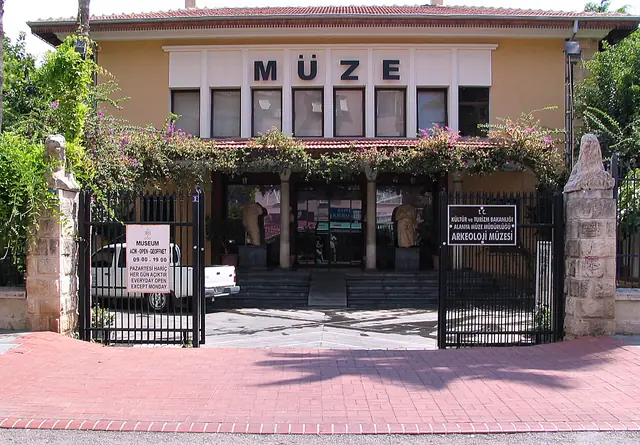
The museum is at Gökyazı Mahallesi, Müze Caddesi, in the centre of Demre; phone 0242 871 60 01. Turkish Museums places Myra in and around the town centre, so the two sites make an easy pair, and the harbour at Andriake is beyond Myra's canal. Demre also pairs well with a boat trip from Üçağız to Kekova and Simena Castle; our Kekova boat trips guide covers the departure points.
Best time to visit
In winter the site closes at 17:30, so start a December afternoon visit by about 16:00 to leave time for the side chapels. 6 December is the saint's feast day; the ministry's page gives it as the day he died. Our Christmas in Antalya guide tracks whether an official programme is published.
Tickets and opening hours
Turkish Museums lists, as of 21 November 2026:
- Winter (1 November–31 March): 08:30–17:30, ticket office closes 17:00.
- Summer (1 April–31 October): 08:30–19:00, ticket office closes 18:30.
- Fees: €17 for foreign visitors aged 8 and over, free under 8; 200 TL for Turkish citizens, free for Turkish citizens under 18 or over 65.
The ministry's museum site (muze.gov.tr) shows 08:30–19:00 with no seasonal split, so check on the day. Neither lists a closing day. The portal also lists an audio guide, a café, a shop and toilets. MuseumPass The Mediterranean, which the portal prices at €90 for seven days, covers more than 40 sites in four provinces; see our MuseumPass guide to check whether it pays off.
Tips
- Dress modestly. It is a museum, but also a historic church built over a saint's tomb.
- Look up and down. The best frescoes are in the side rooms and narthex, and the floors are easy to walk past.
- Take the audio guide. The portal lists one, and the building's phases are hard to read without help.
What's nearby
- Myra Ancient City: the theatre and the Lycian rock tombs.
- Myra and St Nicholas Church: a Demre half-day guide, for a plan that covers both.
- Lycian rock tombs near Antalya, if Myra's cliff whets your appetite.
- Kaş hotels for an overnight stop to the west.