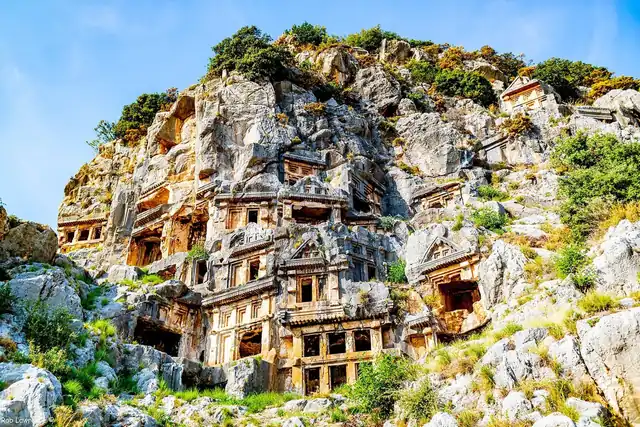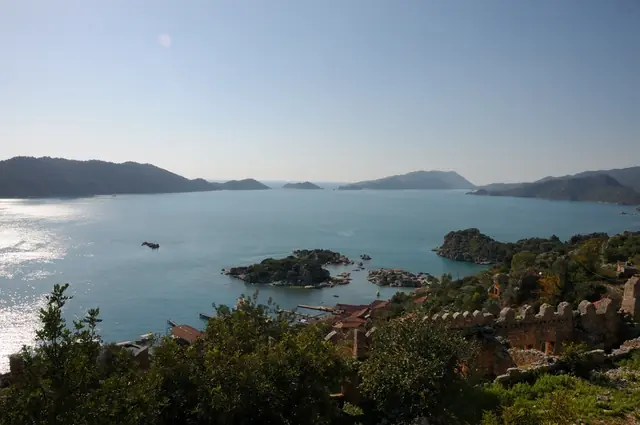
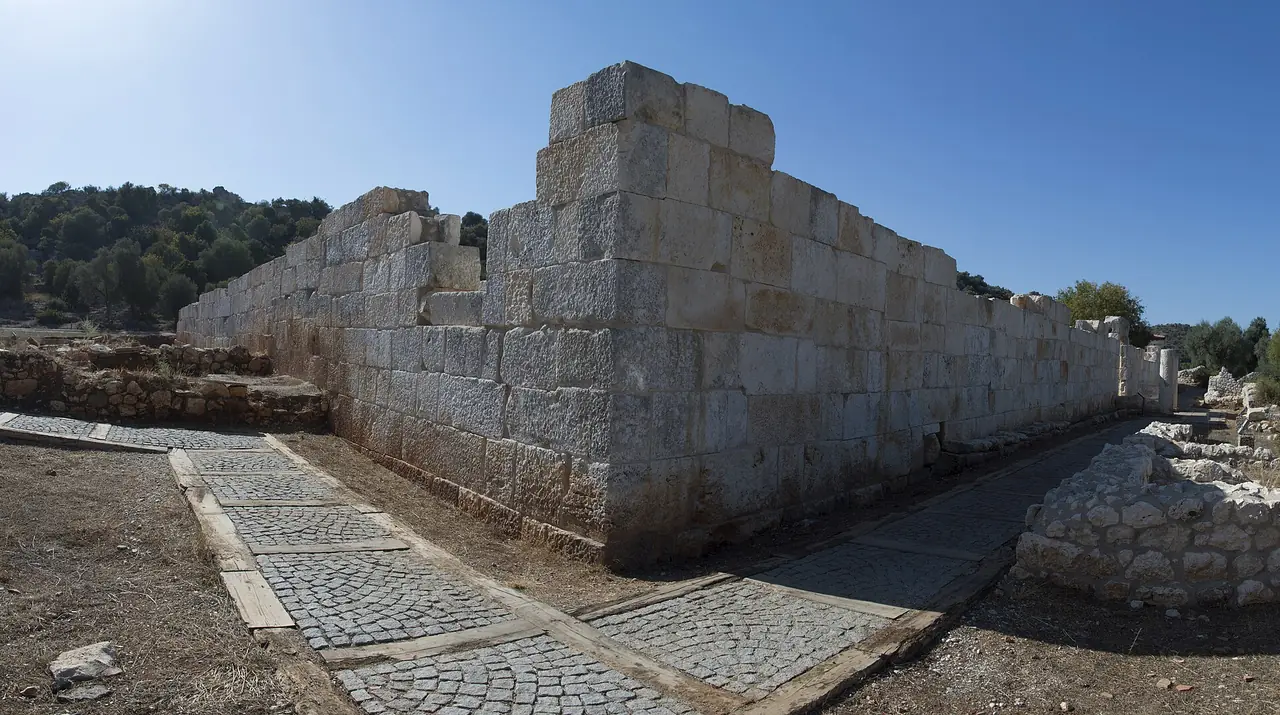
Andriake was the harbour of Myra, the Lycian city at today's Demre. Its ruins lie on the coast at Çayağzı, where the Demre Çayı, the ancient Myros, meets the sea. The star is a Roman granary built under Emperor Hadrian, so well preserved that it still has its roof. Since the 2010s it has housed the Lycian Civilisations Museum (Likya Uygarlıkları Müzesi), a museum about the cities of the Lycian League. Its status is muddled in late 2026, so read "Is it open?" below before you drive out.
What it is
Merchant ships on the Mediterranean's east–west routes called here. The ministry's Turkish Museums portal says Andriake was a central harbour from the Classical to the Byzantine period. The Antalya culture directorate ranks it with Patara among the great harbours of the ancient Mediterranean; both cities had imperial granaries. The harbour worked until the 7th century AD. Then it silted up, and today it is marshland with no way out to sea.
Excavations led by Professor Nevzat Çevik of Akdeniz University began in 2009. The ministry restored the southern settlement in 2012–2014 and opened the site in June 2015. The granary became the museum; the provincial directorate says it has served as one since 2016, while the metropolitan municipality's 2023 booklet says 2015.
Highlights
- Hadrian's granary. The Horrea Hadriani covers about 2,300 m² and dates to AD 129–130, Turkish Museums says. The provincial directorate calls it the largest ancient harbour warehouse in Anatolia.
- Eight halls on Lycia. Six are named after the League's leading cities, which held three votes each, and two after Arykanda and Antiphellos. The directorate lists Myra, Patara, Xanthos, Tlos, Pınara and Olympos. Themes run from history and geography to inscriptions, coins, trade, daily life and religion. Hall seven has an animated model of a Lycian port.
- The harbour agora. The commercial square, or plakoma, lies east of the granary. The restored southern settlement also has a cistern, baths, churches, a synagogue and honorary monuments.
- A rebuilt merchant ship. It sits at the disused quay, loaded with amphorae for olive oil and wine. In front of the granary you'll find pulley-worked cargo lifts and boats under construction.
- Purple dye. The directorate says excavators found a workshop for murex purple dye, a rare colour worn by emperors and the elite, and crushed shells reused in building mortar.
Is it open?
Official pages disagree, so call ahead. Both Turkish Museums pages, for the museum and the site, still carry a notice that they closed on 17 February 2025 for new displays and landscaping. The ministry's fee table, checked on 23 November 2026, prices the joint ticket but marks the museum "closed". Against that, the ministry's 2026 night-museum list included the Lycian Civilisations Museum, open 19:00–21:00 from 1 June to 1 October 2026. Its list of temporarily closed museums does not name Andriake or the museum. Anadolu Agency reported on 16 October 2026 that the museum had opened for evening visits. A local news site reported in July 2026 that the open-air area had reopened with new routes and displays.
The Demre Museum Directorate answers on 0242 871 60 01.
How to get there
Andriake is on the far side of Myra's old canal, Turkish Museums says, at the mouth of the river. On OpenStreetMap the museum lies about 3.5 km southwest of St Nicholas Church as the crow flies. The metropolitan municipality puts Myra about 140 km from Antalya, so it makes a long day out from the city. Our Demre district guide covers the town. The site has a large car park.
Best time to visit
Spring and autumn suit the walk between the ruins best. In summer 2026 the museum stayed open into the evening; we don't know if that will be repeated in 2027. In winter the museum's listed closing time is 17:30. Bring binoculars: a terrace looks over the Kokarçay (the ancient Andrios) and its bird area.
Tickets and opening hours
As of 23 November 2026:
- Fee: €4 for foreign visitors, one ticket for the site and the museum (ministry fee table). It gives no lira price for Turkish citizens and says the MüzeKart is accepted.
- Museum hours (Turkish Museums): winter (1 November–31 March) 08:30–17:30, ticket office closes 17:00; summer (1 April–31 October) 08:30–19:00, office 18:30.
- Site hours (Turkish Museums): 08:30–19:00 in both seasons, office 18:30. That differs from the museum's winter row, so check on the day.
The ministry lists Andriake among the sites covered by MuseumPass The Mediterranean; see our MuseumPass guide. Turkish Museums lists a café, shop and toilets, and a visitor centre that shows videos on Lycia and ancient sea trade.
Tips
- Start at the visitor centre and finish in the granary, as the route is laid out.
- Wear good shoes. The paths are made of railway sleepers and granite slabs.
- Pair it with Myra and St Nicholas Church, Demre's other two sights.
What's nearby
- Myra Ancient City, the harbour's mother city.
- Myra and St Nicholas Church: a Demre half-day guide.
- Simena Castle in Kaleköy and our Kekova boat trips guide.
- Patara Ancient City, Lycia's other granary harbour.
- Stay in Kaş; our Antalya to Kaş day trip covers the coast road.