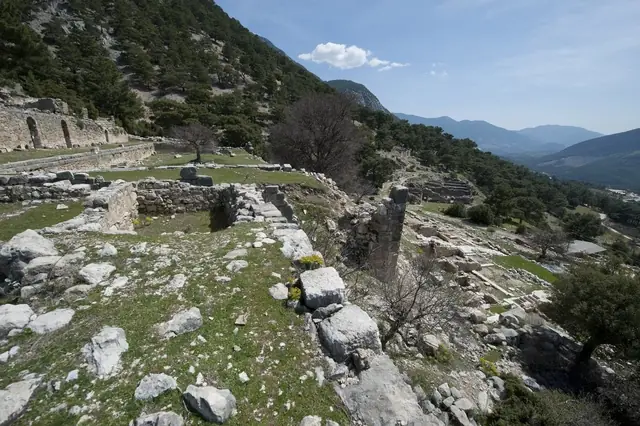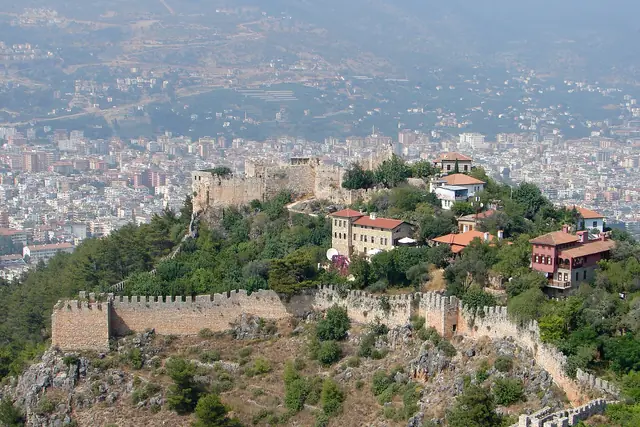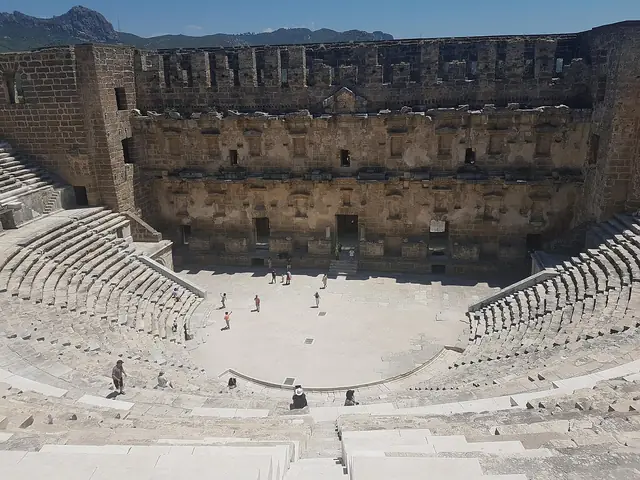
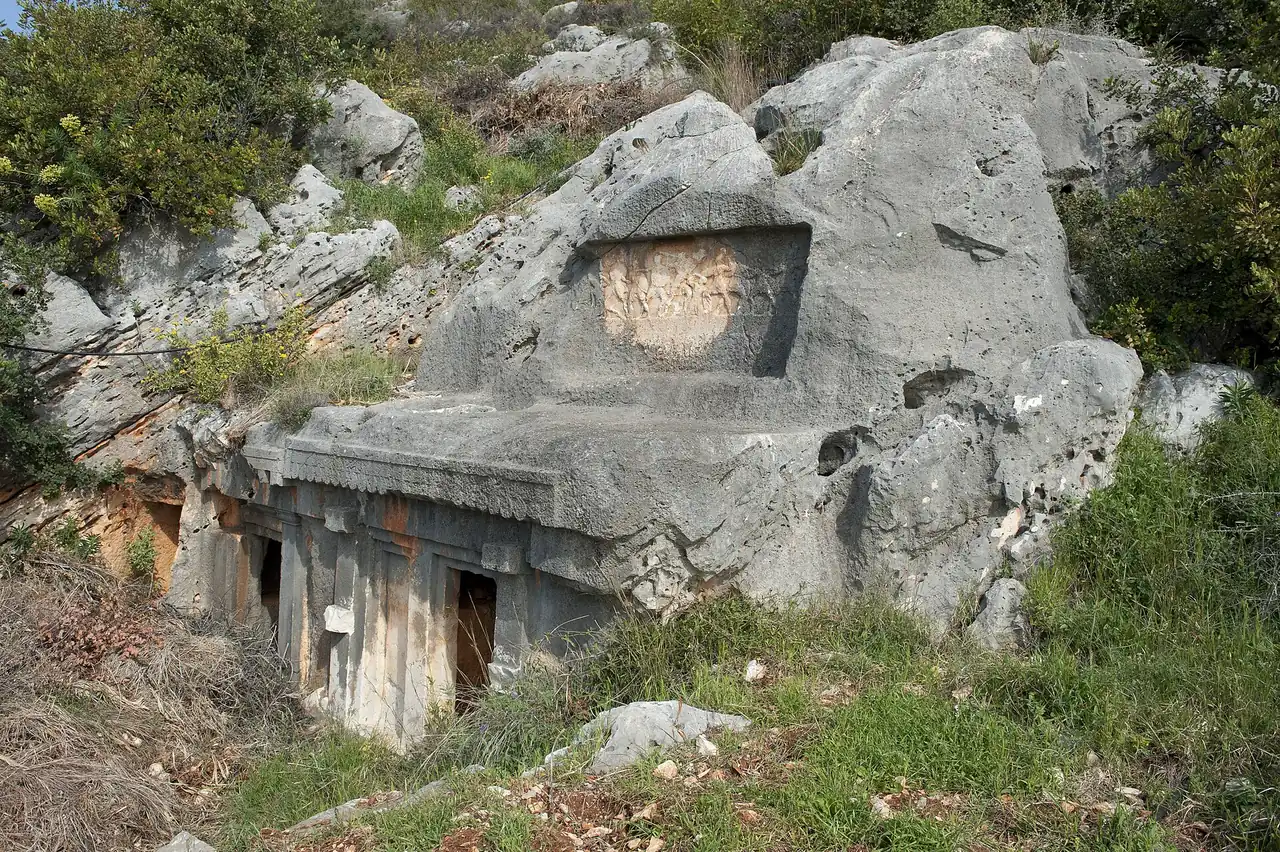
Limyra was a Lycian capital, and it is the easy half of a Finike history day. The city spreads from the southern slopes of Toçak Dağı down onto the plain at Saklısu, in Finike district, and the theatre stands right beside the main road. Entry is cheap, and more than 400 rock tombs are cut into the slopes. Pair it with Arykanda for a full day.
What Limyra is
In Lycian inscriptions the city appears as Zemuri. Finike Municipality says that name shows people lived here from at least the 5th century BC. Limyra's great age came in the first half of the 4th century BC, when King Perikle (Pericles) ruled Lycia from here. The ministry's Turkish Museums portal adds that Persian attempts to control the city never fully succeeded.
After earthquakes, the city rose again in the 2nd and 3rd centuries AD and later became a Byzantine bishopric. Arab raids in the 8th and 9th centuries emptied it. Finike Municipality notes that Limyra is one of the Lycian cities put forward in 2009 for the UNESCO World Heritage List.
Highlights
- The rock tombs. Official pages count more than 400, many with inscriptions in the Lycian language. GoTürkiye says most are known by name, and calls Limyra one of the Lycian cities with the most rock tombs.
- The theatre. Built in the Hellenistic period, it was heavily repaired in AD 141. It stands where the hillside meets the plain, beside the Turunçova–Kumluca road.
- The acropolis. An inner citadel sits high up, with a lower castle below it. The lower castle holds walls, cisterns, a church and the Heroon of Perikle.
- The Heroon of Perikle. The king's monumental tomb is built in the style of the Nereid Monument at Xanthos. Its finest pieces went to the Antalya Museum.
- The Ptolemaion. A Hellenistic building found inside the southern stretch of the city wall. Its sculpture is also in the Antalya Museum.
- The cenotaph of Gaius Caesar. Gaius Caesar was the adopted son of Augustus. Both official pages say he died at Limyra on his way back to Rome from Jerusalem. His remains went to Rome, so the city raised an empty memorial tomb, known for its marble reliefs.
- The lower town. The Limyros stream splits the southern part of the site into an eastern and a western half, inside Roman and Byzantine walls.
Dates differ between official pages. Finike Municipality and GoTürkiye date the Heroon to the 4th century BC. Finike Municipality dates the cenotaph to AD 4. The ministry's English-language Turkish Museums page puts both in the 4th century AD.
The Antalya Museum, which holds the best sculpture from the Heroon, the Ptolemaion and the cenotaph, is temporarily closed, so for now the site itself is all you can see.
How to get there
GoTürkiye puts Limyra 108 km southwest of Antalya city centre. Come by car: no official page we found describes public transport, parking or step-free access. The ministry portal's address line says Arif Köyü, but its own description and Finike Municipality place Limyra at Saklısu, so navigate to Saklısu or to the theatre on the Turunçova–Kumluca road.
Our Antalya to Kaş day trip covers the coast road west, and the Finike district page shows the area.
Opening hours and tickets
When we checked on 12 November 2026, the ministry's Turkish Museums page for Limyra gave:
- Winter (1 November to 30 April): 08:00–17:00 every day, box office closes 16:30.
- "Summer": 08:00–19:00 every day, box office closes 18:30. The page labels this period 1–31 October only and gives no hours for May to September.
GoTürkiye says visitors can stay until 21:00 in summer. We found no closure notice.
Fees, as published on 12 November 2026: foreign visitors aged 8 and over pay €3, and children under 8 enter free. Turkish citizens pay 200 TL, and those under 18 or aged 65 and over enter free. Tickets are also sold online through the portal. The ministry's fee table gives the same €3 and accepts the MuseumPass The Mediterranean (€90 for seven days, per the portal); our MuseumPass guide shows when it adds up. Prices and hours change, so check before you go.
Best time to visit
Spring and autumn are best for the climb to the acropolis. In summer, come at opening time or late in the day. In winter the site closes at 17:00, so arrive by early afternoon; our guide to Antalya in winter has more on the season.
Tips
- Wear proper shoes. The tombs and the acropolis sit on a rocky slope.
- Bring water and snacks. The portal lists a toilet as the only facility.
- Start at the theatre. It's beside the road, so it's the easiest place to get your bearings.
What's nearby
- Arykanda is free to enter, according to the ministry's fee table: see Arykanda Ancient City.
- Myra and St Nicholas Church in Demre: read our Myra guide.
- Xanthos is the city of the Nereid Monument, the tomb the Heroon is compared with: see Xanthos Ancient City.
- To stay on this stretch of coast, browse Kaş hotels, or see the Kumluca district page, where the theatre road leads.