Karain Cave is one of the oldest places people are known to have lived in Anatolia, and it is a short drive from Antalya. The cave opens high on the eastern slope of Mount Katran, above the village of Yağca in Döşemealtı district, and looks out over a wide travertine plain. Come for the story rather than spectacle: deep layers of human life, inscriptions at the entrance and a small site museum. Entry is €5.
What Karain Cave is
The Ministry of Culture and Tourism calls Karain one of Türkiye's largest natural caves. Its Turkish Museums portal says scientific digs began in 1946 and that people used the cave as a home over roughly 500,000 years, from the Lower Palaeolithic to the late Roman period. Döşemealtı Municipality goes further and counts it among the first settlements in Anatolia, and GoTürkiye calls it a key Palaeolithic site for the history of Anatolia and the Near East.
The ministry says the Palaeolithic was the longest and most important phase. Deposits up to about 11 metres thick hold traces of every stage from the Lower Palaeolithic through the Neolithic and Chalcolithic to the Early Bronze Age. Finds include stone and bone tools, beads and pieces the ministry describes as early examples of Anatolian art. Wikipedia lists Neanderthal remains among the finds. It names İsmail Kılıç Kökten and Işın Yalçınkaya as the archaeologists most linked with the site, with dig seasons between 1946 and 2008.
Much later, the cave became a place of worship. Niches and Greek inscriptions are cut into the rock outside. The ministry's pages date them differently: Turkish Museums says Hellenistic, while muze.gov.tr calls them Roman-period votive inscriptions and links them to the cult of a mountain goddess.
UNESCO has had Karain on Türkiye's Tentative List for World Heritage since 1994.
Highlights
- The entrance. Carved niches and Greek lettering on the rock around the cave mouth.
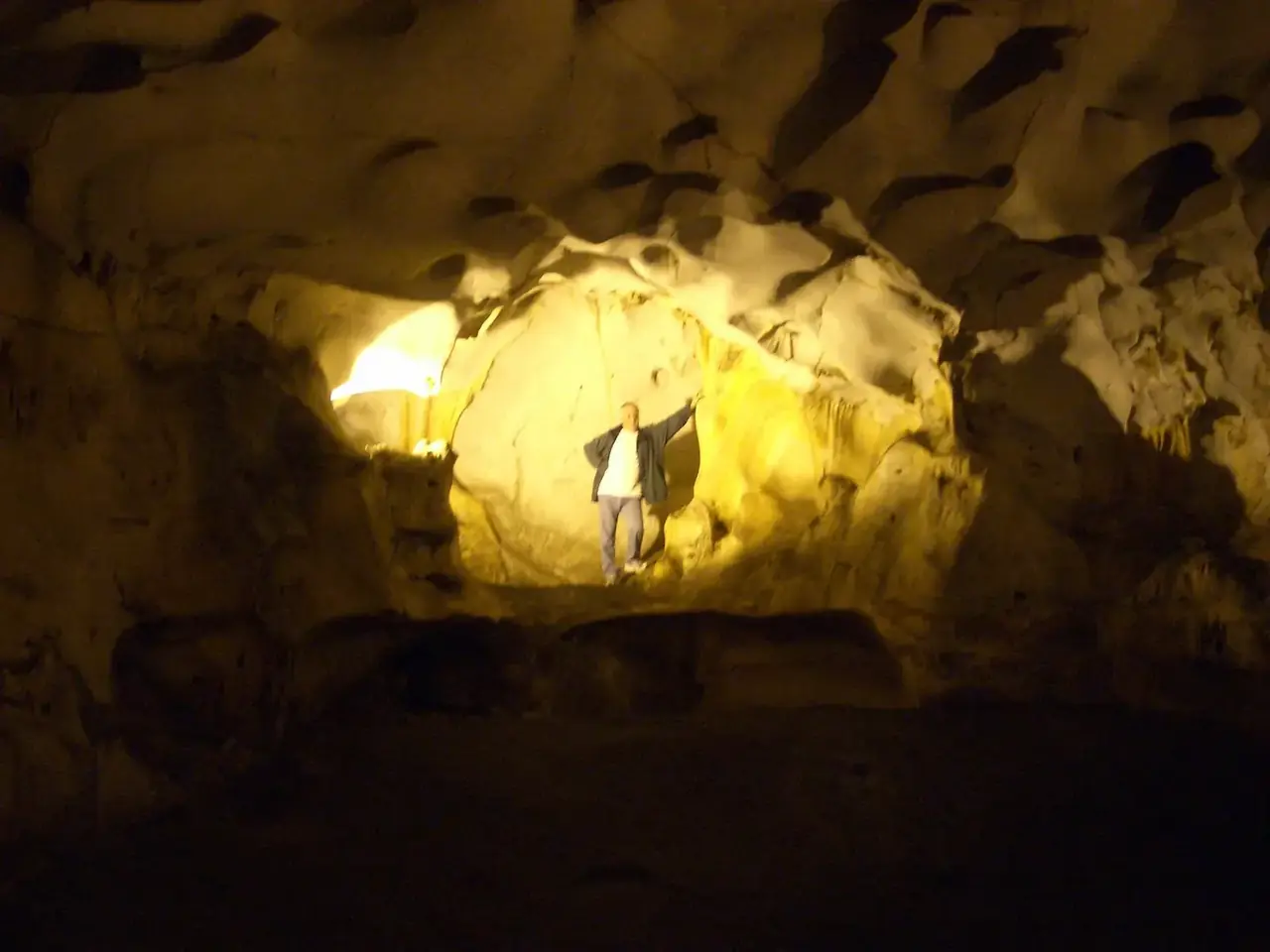
- The chambers. UNESCO describes Karain as a complex of chambers rather than one big hall. Calcite walls and narrow, winding passages divide them, and there are stalactites and stalagmites. Wikipedia counts three main chambers.
- The view. The cave sits about 150 m above the plain and 430 m above sea level, according to UNESCO. It calls the plain below one of the largest travertine plains in the world.
- The Karain Museum. The ministry says some of the finds are shown in a small museum next to the cave. Others went to the Antalya Museum, which is closed for now. The official pages give no separate hours or ticket for the site museum.
How to get there
Karain is at Yağca, in the north-west of Döşemealtı district. The ministry's caves page puts it 5–6 km off the old Antalya–Burdur highway.
Distances differ. Turkish Museums and the ministry's caves page both say about 30 km north-west of Antalya, and UNESCO says 30 km north-northwest. Wikipedia gives 27 km.
Come by car; we found no official bus information. Turkish Museums lists a car park, and the map point on this page comes from muze.gov.tr. The cave mouth is high above the plain, so expect an uphill walk.
Opening hours and tickets
On 14 November 2026, the ministry's two pages gave slightly different hours:
- muze.gov.tr: 08:00–17:00 every day, and the box office closes at 16:30. No seasons are listed. See the official Karain page.
- Turkish Museums: in winter (1 November to 30 April), 08:00–17:00 every day, with the ticket desk closing at 16:30. Its "summer" hours are 08:00–19:30, with the desk closing at 19:00, but the page labels that period 1–31 October only and gives no hours for May to September.
Fees, as published on 14 November 2026: foreign visitors aged 8 and over pay €5, and children under 8 enter free. Turkish citizens pay 200 TL; those under 18 and those aged 65 and over enter free. University students of art history, archaeology and museum studies also enter free. You can buy an e-ticket on muze.gov.tr. The Turkish Museums page also promotes the MuseumPass The Mediterranean (€90, valid seven days). Our MuseumPass guide shows when the pass pays off.
We found no closure notice. The phone number on muze.gov.tr is 0242 423 13 34. Check before you set off.
Best time to visit
Spring and autumn suit the walk up to the cave. In summer, come at opening time. In winter, arrive by early afternoon, because the desk shuts at 16:30; our guide to Antalya in winter has more on the season. The cave is sheltered but the path up is not, so for wet days see our rainy-day museums guide.
Tips
- Wear shoes with grip for the path and the cave floor.
- Bring water. Turkish Museums lists toilets, a shop and parking, but no café.
- Compare fees. Our Antalya on a budget guide sets Karain beside the other ministry sites near the city.
What's nearby
- Termessos, the Pisidian mountain city, is in the same district: see Termessos.
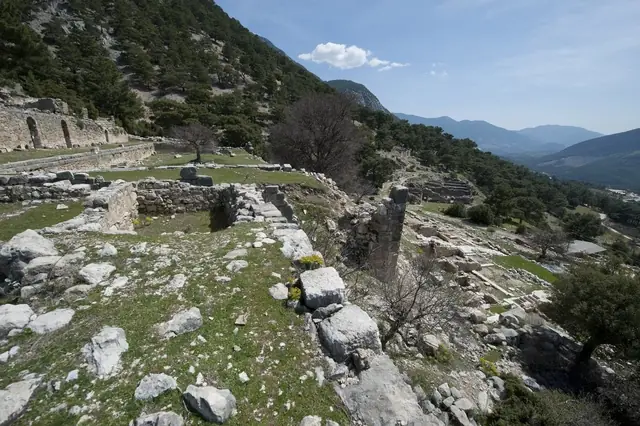
- Döşemealtı's other sights. The provincial culture directorate lists Kırkgöz Han, Evdir Han, the ancient city of Ariassos, the ancient Döşeme road and Döşemealtı's rugs. It also notes that Kocain Cave, another prehistoric cave in the district, was studied alongside Karain; we found no official visiting information for it. The Döşemealtı district page has more.