The theatre is the obvious reason to visit Aspendos. The aqueducts explain a different side of the same city: how people supplied an urban centre with water. If you enjoy understanding how ancient places worked, leave room in your day for more than the auditorium rather than treating Aspendos as a single-building photo stop.
This is a slower alternative to a packed multi-site excursion. For the main monument, see our Aspendos theatre guide. For a wider driving day, compare the Aspendos and Side itinerary before deciding how many stops are realistic for you.
The city above the theatre
Türkiye's UNESCO Tentative List submission describes a flat-topped acropolis with surviving monuments including a nymphaeum, basilica, market building and odeion. These remains broaden the story from entertainment to civic life. The submission also identifies the nearby ancient Eurymedon as today's Köprüçay river and explains the importance of river access to the city's prosperity. Read the primary description.
You do not need to memorise every ancient building name before arriving. A useful question is what each space did for the people who lived here: meeting, trading, gathering or supplying water. Site signs and an informed guide can help connect fragments of walls to those purposes.
Why the aqueducts matter
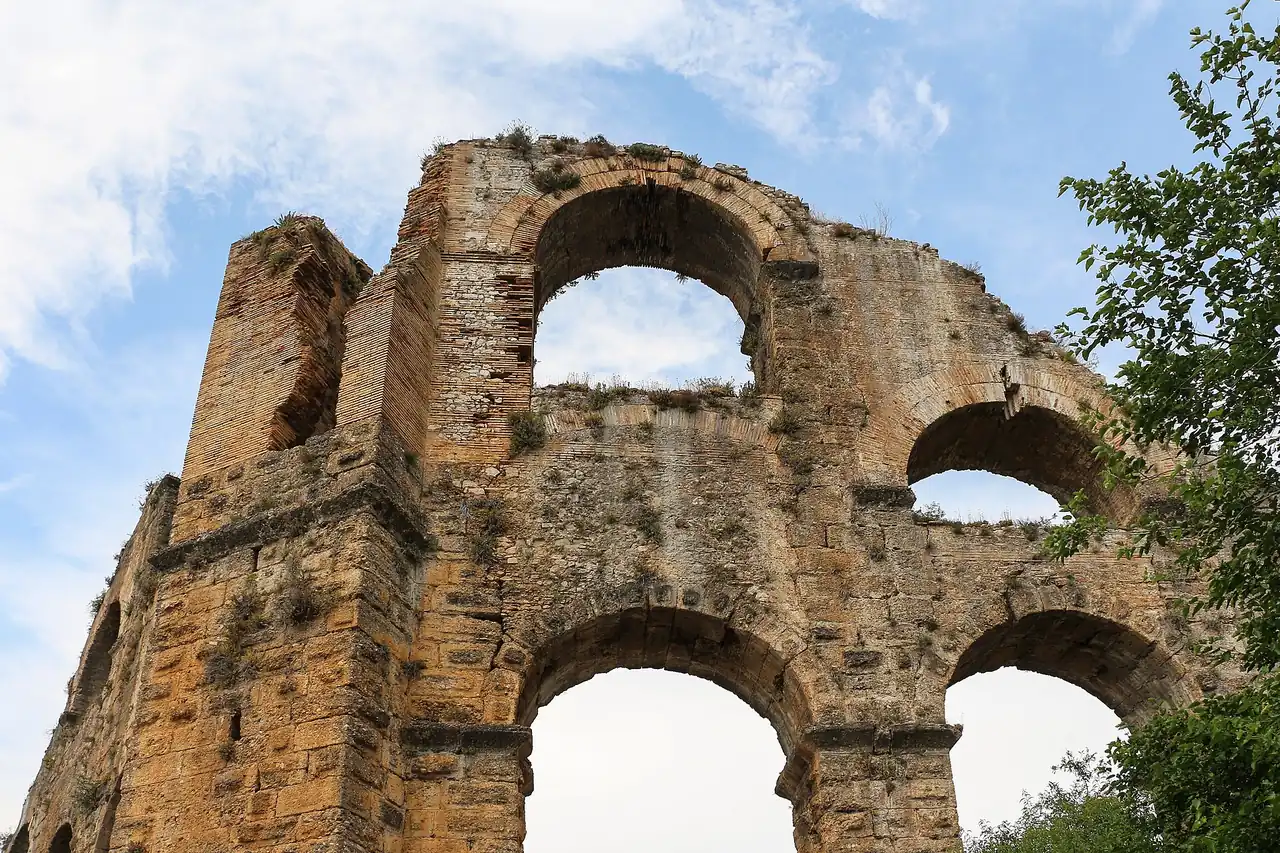
The same submission highlights the aqueduct system's surviving inverted siphons, which allowed water to cross a valley on its way to the city. This is not simply a decorative line of arches. It is evidence of a practical engineering problem and its solution.
Theatre seats are immediately recognisable; a water system takes a little more imagination. Look for how the structure relates to the land around it. A distant view can be more informative than a close-up because it helps show the route across the terrain. Never climb masonry to follow that route, and do not enter fenced or restricted areas.
Plan the visit in layers
Our suggestion is to start with the main visitor entrance and ask what is open that day. See the theatre, then decide whether conditions suit exploring more of the site. Ask specifically about access towards the upper city and where visitors may safely view the aqueducts. Do not assume a route shown in an old photograph remains open.
Leave a generous part of the day available if these additional remains are your priority. A tour marketed as an Aspendos stop may focus on the theatre alone. Before booking, ask whether the upper city or aqueducts are included and how long you will have outside the auditorium. A vague promise to see Aspendos is not the same as a detailed walking plan.
What to bring and what to skip
Bring drinking water, sun protection and shoes suitable for uneven ground. Keep luggage light so you can turn back comfortably rather than feeling committed to a longer walk. In wet or very hot conditions, shorten the plan. For visitors who need a level route, ask the site about accessible sections before making this expanded visit the centrepiece of a day.
Avoid scheduling another paid activity immediately afterwards. The point of this version of Aspendos is having time to look, read and pause. If your group prefers a brief introduction, the theatre-focused visit is a perfectly reasonable choice; extra ruins are not a compulsory checklist.
Check before travelling
The theatre and aqueducts appear on Türkiye's UNESCO Tentative List, not as an inscribed World Heritage property. The nomination is useful historical context, but it is not a live visitor-access bulletin. Verify current entry arrangements and any closures separately. We do not quote a current price or opening time here.
The photograph accompanying this guide is a licensed real image of the Aspendos aqueduct. It illustrates the monument, not a guarantee of today's access, condition or weather.